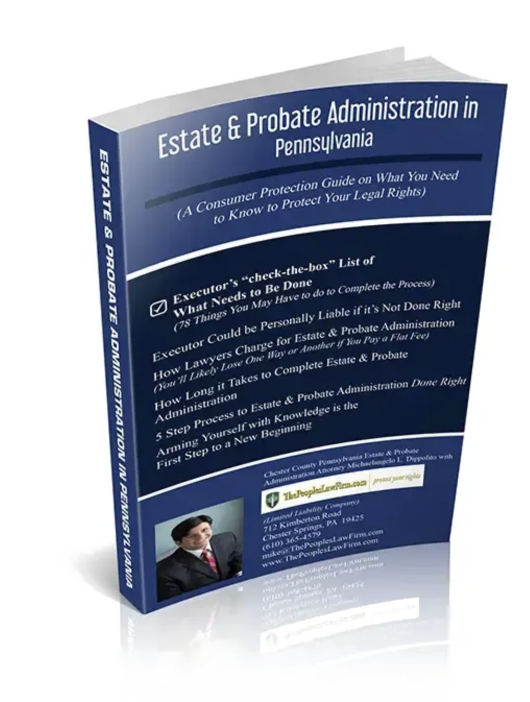





Many of us spend our lives cherishing family heirlooms and mementos, working hard to buy a family home, and accumulating the financial assets needed to live comfortably. One of the most important aspects of building an estate is the comfort of knowing we can pass these assets on to our loved ones after we pass away.
Fortunately, there is a legal process in place to uphold a deceased family member’s wishes after their death while also meeting all legal and financial obligations. This is the Pennsylvania probate process.
If you’ve been designated as a loved one’s personal representative or the executor of their will, you are the probate administrator of their estate after their death. It’s important to know how to file for probate in Chester County, Pennsylvania, and what to expect from the probate process, and when to contact a Chester County probate lawyer.
What Is Probate?
Probate is the legal process that ensures the efficient distribution of a decedent’s assets according to their wishes or through the state’s intestacy laws if they failed to leave a will behind.
All states have probate laws meant to satisfy debts against the property and federal tax obligations before distributing the remainder of a decedent’s property to the designated beneficiaries.
Probate may take between 9 and 18 months, depending on the complexity of the estate’s holdings, the estate’s value, and whether any conflicts arise between family members during the process.
How Does the Probate Administrator File for Chester County Probate?
Probate can be an intimidating prospect for someone who has little experience in estate law. For this reason, it’s highly beneficial to hire a skilled Chester County probate lawyer to guide you through the following process:
- First, the probate administrator must file the will with the Chester County Register of Wills. This requires the original death certificate.
- If the decedent doesn’t have a will or an estate plan, a family member, such as a spouse, adult child, or sibling, may step forward as the personal representative. The court typically grants this authority to the closest surviving family member.
- Next, the probate administrator of the estate files a petition with Chester County’s probate court, or the Orphans’ Court, to open the probate case.
- There is a probate fee applied to the case based on the assessed value of the estate. The probate administrator is responsible for paying the probate fee.
- The probate court issues official documents known as “Letters Testamentary” to the probate administrator named in the estate plan or issues “Letters of Administration” to a court-appointed probate administrator if the deceased family member did not leave behind a valid will or an estate plan.
- The probate administrator then notifies all named beneficiaries in the will, as well as any creditors, informing them that the probate case has opened. It’s also a legal requirement to notify the public through two separate newspapers. Notifying the public serves multiple purposes during probate. It alerts potential unknown creditors to the death and establishes a timeline to limit any claims made by creditors beyond the one-year deadline for creditor claims.
- The probate administrator then performs a meticulous inventory of the estate’s assets, pays creditors, and fulfills tax obligations. Depending on the estate’s available resources, this sometimes requires selling estate property to fulfill financial obligations.
- Pennsylvania requires the probate administrator to file periodic status report updates on the probate process, noting any sale of property that took place to pay creditors or taxes
Finally, once all debts and taxes are paid, the remainder of the estate goes to beneficiaries named in the decedent’s will in the manner the deceased individual specified. A will lawyer in Chester County can help with the process of setting up a will or estate plan in advance.
If the decedent did not have a will, the state’s intestacy laws dictate the distribution of the estate to the closest surviving family member.
When Can a Probate Administrator File for Small Estate Probate In Chester County?
Typical probate is a lengthy, multi-step process that often feels time-consuming and tedious after a death. Under some circumstances, beneficiaries do not have to wait for the full probate process to collect the assets their loved ones left behind for them.
If an estate is valued at $50,000 or less and does not include real estate property, it may qualify for an expedited process. The personal representative may file for small estate probate. This is an abbreviated process that simplifies the distribution of assets for small estates that do not require a lengthy inventory.
To initiate this process, the probate administrator files an affidavit with the Chester County Register of Wills, seeking authority to distribute the assets without waiting for a formal probate process. If approved, the personal representative may transfer property directly to beneficiaries.
Do All Assets Require Probate After a Death In Pennsylvania?
Some estate assets can be exempt from probate entirely. For instance, if the decedent left behind one or more life insurance policies, these funds do not require probate. Instead, the funds are transferred directly to the named beneficiaries. Most assets placed in a living trust also transfer directly to beneficiaries.
In many cases, bank accounts holding funds have a person designated as a Transfer on Death (TOD) beneficiary. The designated TOD beneficiary must present the death certificate to the bank to access the funds held in the account. The funds in a TOD account do not require probate.
How Can a Chester County Probate Law Firm Help Me?
Probate is an exacting legal process. Unfortunately, most personal representatives of a loved one’s estate are not attorneys and have little or no experience navigating the probate process. This may lead to errors, miscalculations, or oversights. Even a simple mistake can cause delays or lead to conflicts between family members.
In the worst cases, a serious oversight or mistake can leave the probate administrator personally liable to creditors, the IRS, or wronged beneficiaries. For these reasons, hiring an experienced probate administration lawyer in Chester County provides a neutral party to reduce conflicts and minimize the risk of errors that could complicate or prolong the probate process or leave the administrator financially liable.
Contact us at ThePeoplesLawFirm.com for a free phone consultation so an experienced probate lawyer can determine the right strategy for your probate case in Chester County.