

Probate Process: Step-by-Step Guide Attorney In Pennsylvania
Chester County Probate Process: Step-by-Step Guide
Living in today’s world often involves accumulating assets, including real estate, financial accounts, vehicles, family heirlooms, and personal property. When a loved one dies, these assets, as well as any debts owed by the deceased person (decedent), remain.
Each state requires a legal process to disperse remaining assets in a way that fulfills all legal obligations to creditors and government agencies and honors the decedent’s personal bequests and wishes.
Probate in Chester County and elsewhere in Pennsylvania is the legal guideline used to ensure an orderly process.
Call ThePeoplesLawFirm.com at 610-600-9844 to schedule a consultation with a lawyer today.
What Is Probate?
Probate is the court process each state uses to resolve an estate according to the expressed terms of the decedent’s will or estate plan, or according to the state’s intestacy laws for those who die without a will. Probate in Pennsylvania typically takes between six and 18 months to accomplish.
During this time, the decedent’s personal representative oversees the legal process and ensures that the decedent’s wishes are upheld. The personal representative—also referred to as an executor, trustee, agent, or probate administrator—is a fiduciary with a legal responsibility to act in the best interests of the estate during the probate process.
Seek more information about wills from a Chester County will attorney.
What Is the Process for Probate In Pennsylvania?
Probate is legally complex and can quickly become challenging, even in the handling of small estates, but particularly for large estates with diverse property and financial holdings. The probate administrator named in the will or by the court must follow the probate process as described below.
First, Legally File the Decedent’s Will
The first step in the probate process requires the probate administrator to file the will with the county’s Register of Wills. This must be done in the county where the decedent resided, and typically occurs soon after the funeral and burial.
If the decedent did not leave a will, the court appoints a probate administrator to manage the estate. Often, a close family member, such as a spouse, sibling, or adult child, volunteers for this duty.
File The Probate Petition
After filing the will, the administrator must file a probate petition with the probate court within the same county. This is also known as the “Orphans’ Court” in Pennsylvania. Filing the probate petition officially opens the probate case.
The probate court requires a fee, the amount of which is based on the estimated value of the estate.
Letters Testamentary
After opening a probate case, the court issues the probate administrator “Letters Testamentary,” authorizing them to act on behalf of the estate. If the decedent did not leave a will, the court issues “Letters of Administration” to appoint a representative.
Public Notification
The probate administrator has the duty to notify all beneficiaries named in the will that the probate process has begun. They are also required to notify any creditors and the general public. Typically, this requires placing a notification in at least two local newspapers.
Inventorying the Estate and Paying Creditors and Taxes
After the probate notifications, the next step requires the probate administrator to conduct an inventory of the estate, compiling a list of assets and debts. Then, they must pay all debts to creditors, which sometimes requires selling property, depending on the estate’s available resources. The probate administrator also fulfills the tax obligations of the estate.
Filing Status Reports
The probate court requires the administrator to file periodic status updates, indicating any estate property sold to satisfy debts or pay taxes.
Distributing Property
Finally, the probate administrator oversees the distribution of all remaining assets, property, heirlooms, and personal belongings according to the decedent’s wishes as expressed in their will, or as the state’s intestacy laws require for the estates of those who die without a will.
Can Some Assets Skip the Probate Process In Chester County?
Some portions of a decedent’s estate may bypass the probate process and go directly to the beneficiaries. For example, a life insurance policy does not require probate. Instead, it’s paid directly to the named beneficiaries.
Any bank accounts with a person listed on the account under a transfer on death (TOD) or payable on death (POD) designation also bypass the probate process. Funds held in these accounts transfer immediately to the designated beneficiary. This usually requires producing a death certificate to the bank.
Estates valued at less than $50,000 don’t “skip” probate, but they go through a shorter, more streamlined process known as Small Estate Probate. This process uses a financial affidavit filed with the Register of Wills in Chester County, enabling the probate administrator to claim assets belonging to the deceased and distribute them according to the terms of the will or intestacy laws, thereby avoiding the longer probate process.
A Chester County small estate probate lawyer can help you with a lower valued estate.
Understanding the Role of Probate Administrator In Chester County
Being the probate administrator of a loved one’s estate is both an honor and a challenging duty, which a Chester County probate administration lawyer can help with. Being named as the personal representative by a cherished loved one means they trust you to carry out their wishes after they pass away.
The probate administrator of a family member’s estate is responsible for meeting all legal requirements, including resolving debts against the estate, paying applicable taxes, and ensuring that the remaining property is distributed correctly to the designated beneficiaries.
The probate administrator is personally responsible and can be held liable for any irregularities that occur, even if the problem was due to an error, oversight, or misunderstanding on the part of the probate administrator.
How Does an Attorney Assist With the Chester County Probate Process?
Even a relatively small estate can become challenging during probate, particularly when there are substantial debts or conflicts among beneficiaries. Settling a larger estate with diverse holdings is a complex and time-consuming process requiring meticulous attention to detail and careful handling.
Because the probate administrator is personally responsible for a complex legal process and often has no background in estate law, it’s not uncommon for mistakes to occur, resulting in conflicts and legal liability.
Hiring an attorney with years of experience in Pennsylvania’s probate court guides the process and ensures that you meet all necessary legal requirements in the most efficient way possible.
Tensions and emotions run high during the probate process. Allowing a neutral attorney with a practice dedicated to estate law to assist in navigating the process helps minimize family conflict and alleviate anxiety, so you and your loved ones can focus on moving forward after the loss.
Let Us Guide You Through Chester County Probate
Navigating probate can be overwhelming, whether you’re administering a small estate or managing a larger, more complex estate. ThePeoplesLawFirm.com can provide the experience and support you need to handle every step of the process correctly, from filing petitions to distributing assets and resolving debts.
Contact us today to schedule a consultation with a Chester County probate attorney to get the experienced guidance you need.
Have Questions?
Contact ThePeoplesLawFirm.com today at 610-600-9844 to speak with an experienced estate and probate administration attorney. We're here to answer your questions, explain the estate administration process, and provide the trusted legal guidance you need to move forward with confidence.
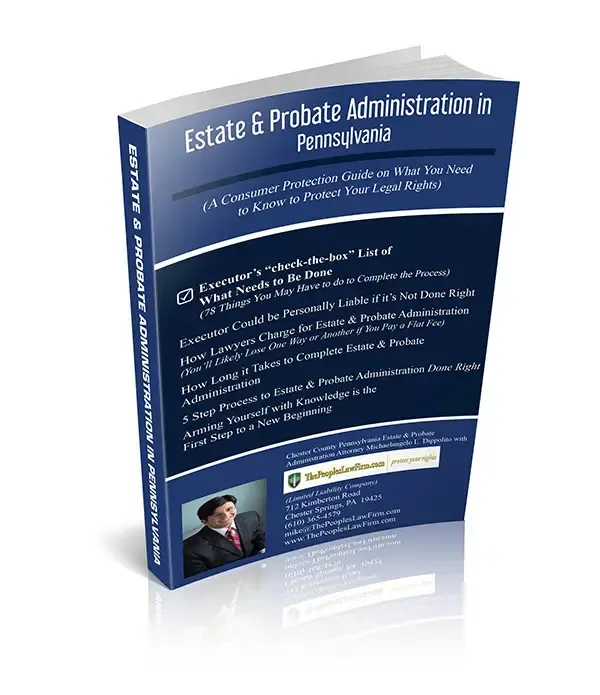
Still Not Ready and Want to Learn More Before You Move Forward? No problem.
Continue to click on your topics of interest on Estate & Probate Administration in Pennsylvania. And remember, we’re just at phone call away at 610-600-9844.